



Introduction: Why Red Light Therapy Is Gaining Attention in Workout Recovery
Every intense training session or extreme stretch triggers a microscopic storm inside your muscles: micro-damage, oxidative stress, inflammation, and cellular energy depletion. These processes are essential for muscle adaptation, yet they can slow recovery and hinder consistent progress.
Now, imagine a method that works at the cellular level to accelerate repair, reduce soreness, and restore vitality — increasingly recognized by athletes, rehabilitation specialists, and fitness enthusiasts: Red and Near-Infrared Light Therapy (Photobiomodulation, PBM).
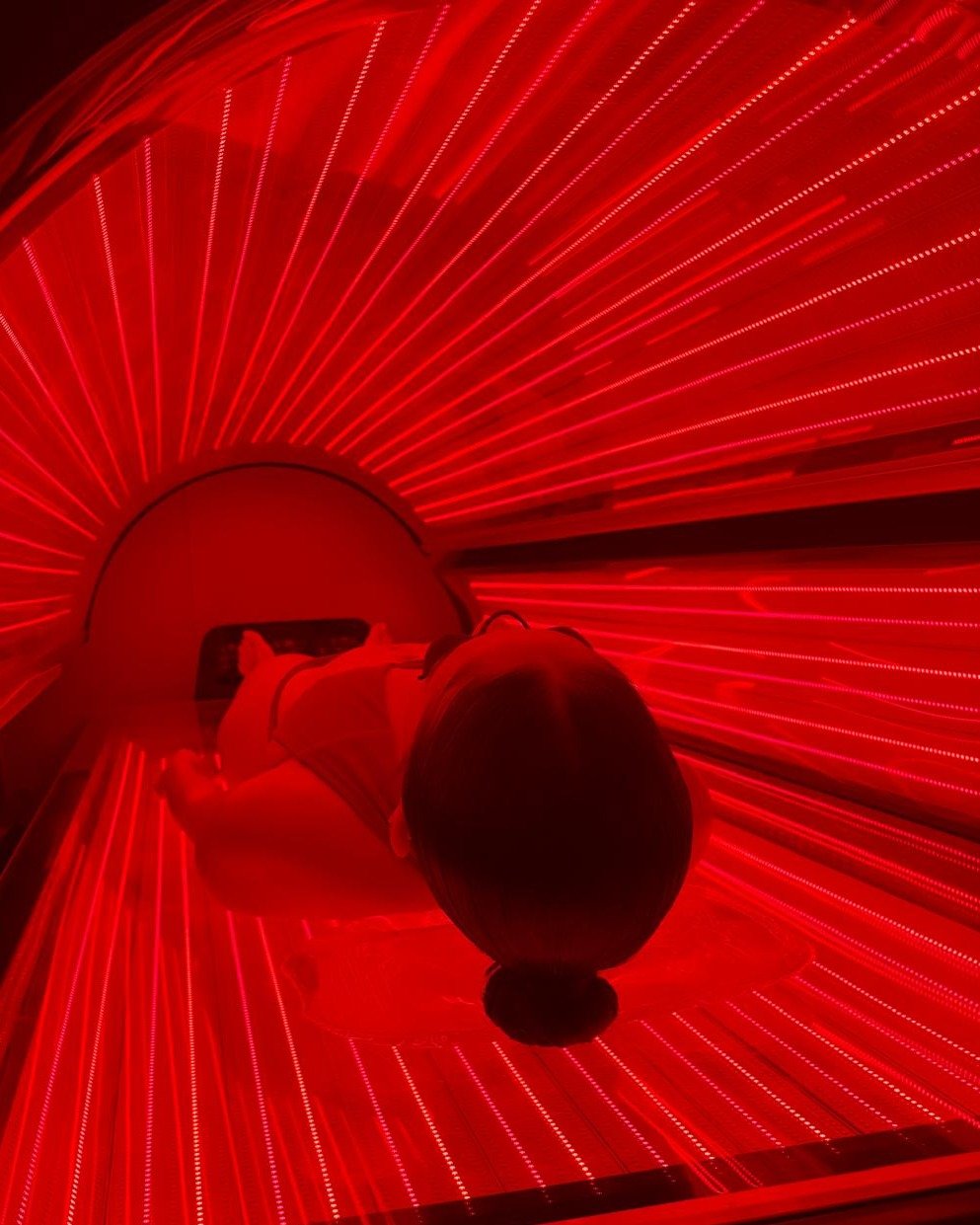
In this article, we will explore how red light therapy supports workout recovery: enhancing ATP production at the mitochondrial level, regulating inflammation and oxidative stress, improving blood flow, and activating muscle regeneration pathways. We will also review clinical evidence, provide practical guidance, device selection tips, and common pitfalls. Readers will understand not only what red light therapy can do but also how to use it effectively.

How Red Light Therapy Works: Mechanisms of Action
Mitochondrial Activation and ATP Production
Red (approximately 600–700 nm) and near-infrared light (approximately 700–1000 nm) are absorbed by chromophores in mitochondria, particularly cytochrome c oxidase. Light exposure helps release inhibitory nitric oxide from the enzyme, restoring electron transport efficiency and increasing ATP synthesis. More ATP means more energy for protein synthesis, membrane repair, and metabolic recovery.
Oxidative Stress and Inflammation Regulation
Intense exercise generates reactive oxygen species (ROS) and inflammatory cytokines (IL-6, TNF-α). Red light therapy can upregulate antioxidant enzymes like superoxide dismutase (SOD) and catalase, reducing oxidative damage. It also helps modulate inflammatory mediators, reduce swelling, and lower muscle damage markers such as creatine kinase (CK).
Improved Blood Flow and Waste Clearance
Red and near-infrared light stimulates nitric oxide (NO) release, causing vasodilation. Increased blood flow delivers more oxygen and nutrients to muscles and accelerates the removal of metabolic waste, including lactic acid and inflammatory molecules. Studies also show improved microcirculation and tissue oxygenation, further supporting recovery.
Activation of Repair Pathways and Muscle Regeneration
Red light therapy may stimulate muscle satellite cells, promoting their proliferation and integration into damaged fibers. It also enhances protein and collagen synthesis, supporting tendon and connective tissue repair. Pre-exercise application may reduce subsequent muscle damage and delay fatigue.
Clinical Evidence and Meta-Analyses
Performance Enhancement and Fatigue Delay
Multiple randomized controlled trials (RCTs) indicate that red and near-infrared light therapy applied before exercise can extend endurance, increase repetitions, and improve muscular output. Meta-analyses support improved performance metrics when PBM is used before, during, or after workouts.
Reduced Delayed-Onset Muscle Soreness (DOMS)
Several studies report that red light therapy significantly reduces DOMS severity and shortens recovery time to normal strength and activity levels.
Lower Muscle Damage Biomarkers
Participants receiving red/near-infrared therapy showed lower increases in creatine kinase (CK) 48–72 hours post-exercise, indicating reduced muscle damage.
Long-Term Strength and Adaptation
Some small-scale studies suggest that incorporating PBM over multiple weeks may enhance strength or repetition capacity compared to control groups, although study heterogeneity limits broad conclusions.
Research Limitations
Studies vary widely in device type (LED vs. laser), wavelength, power, treatment method (spot vs. panel), duration, and frequency. Many trials have small sample sizes and short durations, making generalization difficult despite positive trends.
Practical Guidelines for Using Red Light Therapy in Workout Recovery
Selecting the Right Wavelength and Device
- Use devices emitting in the red (600–700 nm) and/or near-infrared (800–850 nm) ranges.
- Ensure device output is stable, beam coverage appropriate, and specifications verified.
Energy/Dose Considerations
- Spot treatment: ~5–6 Joules per point is typical in studies.
- Adjust total energy for larger area panels based on irradiance (mW/cm²).
- Recommended irradiance: 50–200 mW/cm²; too low may be ineffective, too high offers no extra benefit.
Session Timing, Duration, and Frequency
- 5–15 minutes per target area, depending on power, area, and distance.
- Distance should allow sufficient penetration without overheating.
- Training days: 1–2 sessions (pre- and post-workout); high-intensity periods may require more frequent sessions.
Timing Relative to Training
- Pre-workout: helps precondition muscles, reduce damage, and enhance performance.
- Post-workout: aids in inflammation control, repair, and soreness relief.
- If possible, combine both; otherwise, prioritize post-workout sessions.
Target Area and Coverage
Focus on muscles used most during training. For larger muscle groups, use panels covering multiple regions for more comprehensive benefits.
Device Safety
- Choose high-quality LED or laser devices with verified wavelength and power output.
- Laser devices require eye protection and proper training.
- Individuals with photosensitivity, skin conditions, or on photosensitizing medications should consult a physician before use.
Risks, Misconceptions, and Limitations
- Excessive use does not improve results and may cause stress.
- Deep muscles may not receive full light penetration.
- Individual differences (skin tone, fat layer, tissue scattering) affect results.
- Over-suppressing inflammation could interfere with adaptive signaling.
- Device quality varies; verify parameters before use.
Integrating Red Light Therapy into Your Training Routine
Strength Training / Heavy Load Days
Pre-workout: 5–10 minutes on target muscles as preconditioning. Post-workout: 5–10 minutes for repair. Optional morning session if soreness persists.
Endurance / Cardio Training
Post-training: 10–15 minutes on main muscles to aid recovery, metabolite clearance, and reduce fatigue.
High-Frequency / Overload Phases
During intensive cycles, consider increased frequency (daily or twice per day) combined with active recovery, massage, and stretching.
Recovery / Rest Days
Apply therapy to major or all muscle groups to promote blood flow, soft tissue recovery, and reduce residual fatigue.
Minor Muscle Injuries / Strains
Under professional guidance, target injured muscle areas daily or every other day along with physiotherapy and rehabilitation.
Conclusion: A Practical and Science-Based Recovery Tool
Red and near-infrared light therapy (PBM) offers powerful cellular-level benefits for workout recovery. By boosting mitochondrial energy, modulating oxidative stress and inflammation, improving blood flow, and activating repair pathways, it can shorten recovery times and enhance performance consistency.
It is not a magic solution — real results depend on correct wavelength, dose, timing, device quality, and integration into proper nutrition, sleep, active recovery, and periodized training. When applied intelligently, red light therapy can help athletes recover faster, train more consistently, and achieve sustainable progress.

 EN
EN EN_GB
EN_GB DE
DE EL
EL ES
ES UZ
UZ FR
FR IT
IT JA
JA CS
CS DA
DA DE_AT
DE_AT FI
FI ET
ET HR
HR FR_BE
FR_BE HU
HU KO
KO IS
IS KA
KA LT
LT NL
NL UK
UK TR
TR SV
SV SR
SR SL
SL SK
SK RU
RU RO
RO PT
PT NB
NB AR
AR CY
CY