



Introduction: Beyond the Surface of Stubborn Fat
For millions of people, the journey toward body confidence is often interrupted by the appearance of cellulite. It is a shared frustration that transcends body type; whether you are in the midst of a weight loss transformation or are an elite athlete with a low body fat percentage, the “orange peel” texture can still appear on the hips, thighs, and abdomen.
We often view cellulite as a simple cosmetic nuisance, but biologically, it is a complex interplay between fat cells, connective tissue, and skin health. While the market is flooded with quick-fix creams and expensive invasive procedures, the search for a non-invasive, biologically harmonious solution has led researchers to Photobiomodulation—commonly known as Red Light Therapy (RLT).
In this extensive guide, we will dismantle the myths surrounding cellulite, explore why traditional treatments often fail, and provide a deep dive into the research demonstrating how Red Light Therapy can revolutionize your tissue health, reduce fat, and smooth skin texture.
Σημείωμα: For those ready to integrate clinical-grade light therapy into their home routine, the PlatinumLED shop offers the most powerful panels designed for weight loss and skin toning.
Part 1: Anatomy of the Problem
What Is Cellulite Exactly?
To understand how to treat cellulite, we must first understand its architecture. Cellulite is not merely “fat.” It is a structural condition of the subcutaneous layer of the skin. It manifests when enlarged adipose (fat) cells are pushed upward against the dermis, while fibrous connective cords (called septae) pull the skin downward to attach to the muscle.
Think of a button-tufted mattress. The “buttons” are the connective cords pulling down, and the “fluff” is the fat bulging up. This tension creates the characteristic dimpling. It is most prevalent in the pelvic region, lower limbs, and abdomen due to the higher concentration of fatty tissue and specific receptor types in these areas.
The Biological Causes: Why Me?
Cellulite is incredibly common, affecting nearly 90% of post-pubescent women and roughly 10% of men. This disparity is largely due to the structure of collagen fibers: in men, fibers are arranged in a cross-hatch pattern that contains fat effectively. In women, these fibers run vertically, acting like pillars that allow fat to herniate upward easily.
However, the presence of cellulite is multifactorial:
- Hormonal Fluctuations: Estrogen, insulin, noradrenaline, thyroid hormones, and prolactin are essentially part of the cellulite production process. As estrogen decreases (approaching menopause), blood flow to the connective tissue decreases, causing lower oxygenation and lower collagen production.
- Genetics: Specific genes are required for cellulite development. These genes govern a person’s metabolism, distribution of fat under the skin, ethnicity, and circulatory levels.
- Diet and Lifestyle: A diet high in carbohydrates, fat, and salt, and with too little fiber can contribute to greater amounts of cellulite.
- Age and Skin Thickness: As we age, the dermis loses thickness. A thinner dermis cannot suppress the pressure of the subcutaneous fat as effectively, making the dimpling more visible.
- Inflammation: Chronic, low-grade inflammation in the body can damage connective tissue, making it rigid and pulling the skin down tighter, exacerbating the dimpled look.
Part 2: The Failure of Conventional Treatments
Before diving into Red Light Therapy, it is crucial to understand why most “drugstore cures” yield disappointing results. The beauty industry is saturated with promises, but the biology often contradicts the marketing.
1. Lifestyle Changes: Necessary but Insufficient
Healthy eating and cardiovascular exercise are the pillars of health. They reduce the volume of fat in the cells, which can alleviate some pressure on the connective tissue. However, weight loss does not break the fibrous bands pulling the skin down. Furthermore, if the skin lacks elasticity, losing weight can sometimes make cellulite appear worse due to loose, sagging skin. Even marathon runners often have visible cellulite because the structural integrity of the collagen mesh is independent of muscle size.
2. The Myth of Skin-Firming Creams
The topical market is a multi-billion dollar industry built largely on hope. There is currently no robust scientific evidence that creams can permanently cure cellulite. The skin is a barrier designed to keep things out; therefore, the absorption of active ingredients into the subcutaneous fat layer is minimal.
- Caffeine: A common ingredient intended to act as a vasoconstrictor and diuretic. While it may dehydrate fat cells temporarily, making the skin look tighter for a few hours, it does not alter the fat structure or collagen bands.
- Retinol: Vitamin A derivatives can increase collagen production and thicken the skin, which helps camouflage cellulite. However, this takes months of diligent use, and many users suffer from “retinol burn,” peeling, and sensitivity.
- DMAE (Dimethylaminoethanol): Marketed as an antioxidant to firm skin, its safety profile for long-term use is not fully established, and its effects are superficial.
3. Invasive Procedures: High Cost, High Risk
Dermatological procedures offer more dramatic results than creams but come with significant downsides.
- Δερματικά Γεμιστικά: Injectables like Calcium Hydroxylapatite or Poly-L-lactic Acid attempt to “fill in” the dimples.
- The Downside: They are temporary (lasting 6 to 24 months), incredibly expensive, and carry risks of allergic reactions or lumpy unevenness. They add volume rather than fixing the structure.
- Laser Lipolysis: This involves inserting a laser probe under the skin to burst fat cells.
- The Downside: It is invasive, requires recovery time, and carries a risk of burns. Crucially, if the skin is not elastic enough to “snap back” after the fat is removed, the area can look deflated and wrinkly.
- Liposuction: Traditional liposuction removes deep fat, not the subcutaneous fat responsible for cellulite. In fact, liposuction often makes cellulite look worse by creating more unevenness under the skin.
Part 3: The Science of Red Light Therapy (Photobiomodulation)
Red Light Therapy represents a paradigm shift. Instead of cutting the skin or applying chemicals, it uses specific wavelengths of light to energize the body’s cells to heal themselves. This is not “heat” therapy; it is a photochemical reaction, similar to photosynthesis in plants.
How Light Interacts with Human Tissue
To treat cellulite effectively, light must penetrate the skin to reach the subcutaneous fat and the connective tissue.
- Red Light (630nm – 660nm): These wavelengths are absorbed by the skin’s surface layers (epidermis and dermis). They are essential for stimulating collagen production to thicken the skin and smooth texture.
- Near-Infrared Light (NIR) (810nm – 1060nm): These longer wavelengths are invisible to the human eye. They penetrate much deeper, reaching the subcutaneous fat, muscles, and even bone. This is where the deep tissue repair and fat-loss mechanisms occur.
PlatinumLED’s BIOMAX Series utilizes a proprietary blend of these wavelengths to ensure every layer of the tissue—from the surface skin to the deep fat pockets—is saturated with therapeutic energy.
Part 4: Mechanisms of Action – How RLT Eradicates Cellulite
The effectiveness of Red Light Therapy on cellulite is not magic; it is biology. It attacks the problem through four distinct mechanisms.
Mechanism 1: Restoring Cellular Energy (The Mitochondrial Boost)
At the heart of every cell is the mitochondria, the “power plant.” When cells are stressed or aged, mitochondria produce less ATP (Adenosine Triphosphate), the energy currency of life. Red light stimulates the enzyme cytochrome c oxidase, breaking the bond of nitric oxide and allowing oxygen to flood the cell. This results in a massive surge of ATP production. High-energy cells function more efficiently, repair damage faster, and metabolize fat better.
Mechanism 2: Collagen and Elastin Synthesis (Structural Repair)
Cellulite bulges because the connective tissue is weak and the skin is thin. Red light therapy is a potent stimulator of fibroblasts, the cells responsible for building collagen and elastin.
- Thicker Skin: By increasing collagen density in the dermis, the skin becomes thicker and firmer, effectively pushing back against the fat and hiding the irregularities.
- Elasticity: Increased elastin allows the connective bands to be more flexible, reducing the “tufting” effect that creates dimples.
Mechanism 3: Lipolysis (Fat Cell Leakage)
This is perhaps the most exciting mechanism for weight loss. Research indicates that red light exposure causes fat cells (adipocytes) to develop temporary pores in their membranes.
- The “Leak”: This process, known as lipolysis, allows lipids and fatty acids to leak out of the cell and into the interstitial space.
- The Result: The fat cell shrinks. As the fat cells deflate, they exert less pressure on the connective tissue, significantly smoothing the appearance of the area.
- Study Highlight: A seminal study by researchers in Boston demonstrated that after just four minutes of laser exposure, 80% of fat was released from adipocytes; by six minutes, nearly all fat had been released.
Mechanism 4: Angiogenesis (Improved Circulation)
Poor blood flow is a major contributor to cellulite formation. When circulation is compromised, tissues don’t get enough oxygen, and collagen fibers harden. RLT promotes angiogenesis—the formation of new capillaries. This brings a rush of oxygen and nutrients to the compromised tissue, softening the hardened septae and allowing the skin to relax.

Part 5: The Lymphatic Connection
In this detailed guide, we must address a critical factor often overlooked in standard articles: The Lymphatic System.
Cellulite is inextricably linked to fluid retention. The lymphatic system is the body’s waste disposal unit. When the lymph system becomes sluggish, toxins and fluids accumulate in the subcutaneous tissue. This fluid pushes against the skin, making cellulite bulges look swollen and more pronounced.
[Image of human lymphatic system]
How Red Light Therapy Helps Lymphatic Drainage:
Red and Near-Infrared light have been shown to stimulate lymph vessel diameter and the flow of the lymphatic system. By reducing the edema (swelling) around the fat cells, RLT reduces the overall volume of the problematic area.
When you combine the fat-releasing effect of RLT with its fluid-draining capabilities, you are addressing both the solid and liquid components of cellulite simultaneously. This dual-action approach is why RLT often succeeds where diet alone fails.
Part 6: Clinical Evidence and Research
Does it actually work in practice? The scientific literature suggests a resounding yes.
- Treadmill vs. RLT Combination: A controlled clinical trial involving 20 women (aged 25-55) compared high-intensity treadmill training alone against treadmill training combined with 850nm NIR light therapy. The results were statistically significant: the group combining exercise with light therapy saw a massive reduction in cellulite grades, while the exercise-only group saw minimal change in skin texture.
- Gel vs. Light Combination: Another study treated women with anti-cellulite gel alone versus gel plus red/NIR light. The combination group showed significant improvements in thigh and gluteal cellulite after 24 sessions.
The Lesson: While RLT is effective, it acts as a force multiplier. It enhances the body’s natural processes, making your exercise and healthy lifestyle choices exponentially more effective.
Part 7: Synergistic Stacking for Maximum Results
To provide you with a truly “rich” guide, we introduce the concept of “Bio-Stacking”—combining RLT with other modalities.
While Red Light Therapy is powerful on its own, you can accelerate your results by “stacking” it with other mechanical treatments.
- RLT + Vibration Plate Therapy: Standing on a whole-body vibration plate while using your RLT panel can enhance lymphatic drainage. The vibration shakes the fluids loose, and the light stimulates the flow, creating a powerful detoxifying effect.
- RLT + Dry Brushing: Dry brushing before a light therapy session exfoliates the skin (allowing better light penetration) and manually stimulates lymph flow.
- RLT + Cupping: Silicone cupping massage creates negative pressure that lifts the connective tissue, while RLT heals the tissue. Using these together can help physically break up the rigid fibrous bands that cause deep dimpling.
Part 8: Protocol – How to Use Red Light Therapy at Home
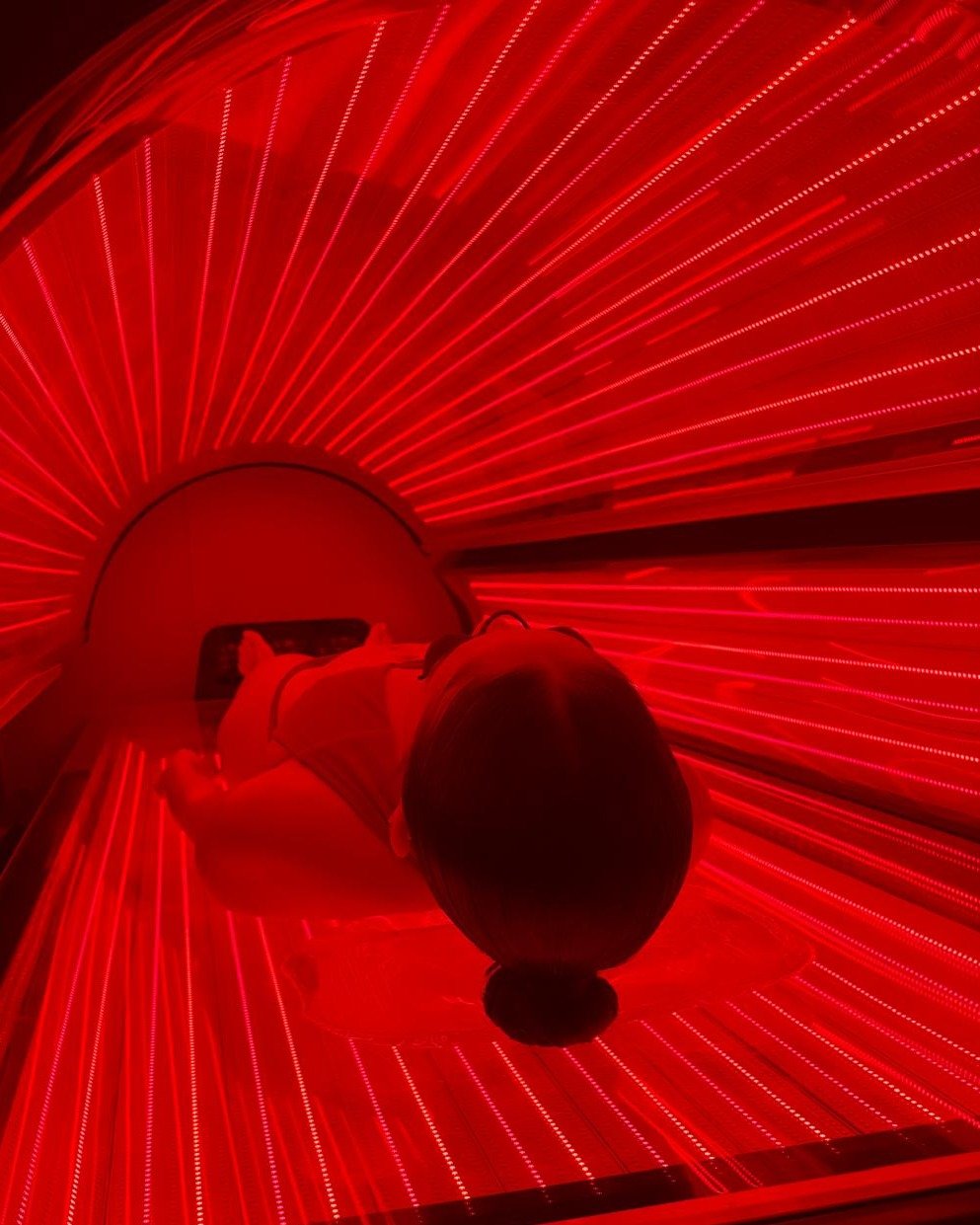
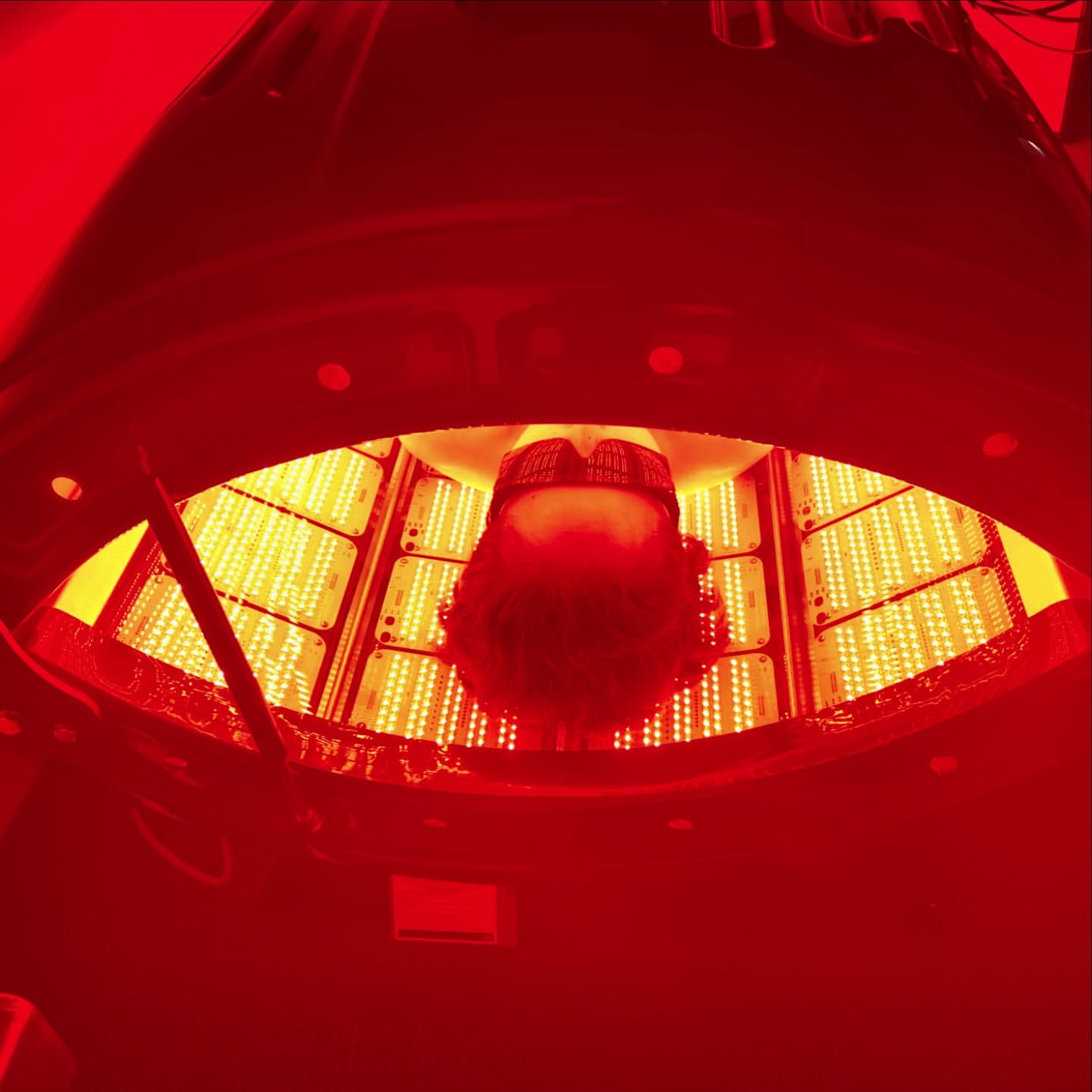
Gone are the days when you needed to visit a medispa to access this technology. With high-powered home devices like the M4N, you can achieve clinical dosages in your living room. However, consistency and technique are paramount.
Επιλέγοντας τη σωστή συσκευή
Not all lights are created equal. Cheap masks or low-powered wands lack the “irradiance” (power density) to penetrate deep into the subcutaneous fat. You need a high-output LED panel.
- Μήκη κύματος: Look for a mix of 630nm, 660nm (Red) and 810nm, 830nm, 850nm (NIR). The inclusion of 1060nm (found in BIOMAX) is particularly effective for deeper tissue interaction.
- Power: The device must deliver enough energy to trigger the mitochondrial response within a reasonable time frame (10-20 minutes).
The Step-by-Step Routine
- Expose the Area: Light cannot penetrate clothing. You must have bare skin.
- Distance: Position the panel 6 to 12 inches away from your body.
- Time: Treat the affected area (thighs, buttocks, stomach) for 10 to 20 minutes.
- Συχνότητα: Aim for 3 to 5 sessions per week.
- Διάρκεια: Cellulite is a structural issue; it takes time to rebuild collagen. Expect to commit to a 1-to-4-month protocol to see significant structural changes, followed by maintenance sessions 1-2 times a week.
Ζητήματα ασφαλείας
Can you overdo it? Yes. This therapy follows a “biphasic dose response.” This means that while a certain amount of energy is therapeutic, too much can negate the benefits. Stick to the recommended 10-20 minutes per area. More is not better; consistency is better. RLT is safe, generates no UV radiation, and causes no thermal damage, but respecting the body’s absorption limits is key to results.
Part 9: Frequently Asked Questions (FAQs)
1. Will Red Light Therapy cause me to lose fat in areas I want to keep it, like my breasts or face?
Red Light Therapy primarily targets adipocytes that are under metabolic stress or are being targeted by the body for energy use. However, systemic lipolysis can occur. Generally, RLT helps “sculpt” the body by tightening skin and reducing excess fluid. If you are concerned about volume loss in the face, you can reduce the time of exposure for facial areas or use a lower intensity setting, focusing the high-power treatment only on problem areas like thighs and abdomen.
2. Can I wear clothes or leggings during the treatment?
No. Red and Near-Infrared light waves are easily blocked, scattered, or reflected by fabrics. Even thin yoga pants will block the vast majority of the light energy. For the photons to reach the mitochondria in your fat cells and skin, there must be a direct line of sight between the LED bulbs and your bare skin.
3. Is Red Light Therapy safe to use if I have spider veins or varicose veins?
Yes, and it may actually help. While RLT is not a cure for varicose veins, the mechanism of improved circulation and angiogenesis (formation of new blood vessels) can help strengthen vascular walls and improve overall blood flow. This can reduce the pressure in the veins. However, if you have a history of blood clots or severe vascular disease, always consult your physician before starting any new therapy.
Conclusion: A Bright Future for Body Contouring
The battle against cellulite has historically been fought with ineffective creams and painful surgeries. Red Light Therapy offers a third path—one that aligns with the body’s natural biological wisdom. By energizing cells, rebuilding the collagen matrix, and stimulating the release of stored fat, RLT addresses the root causes of cellulite rather than just the symptoms.
It requires patience and consistency, but the rewards extend far beyond smoother thighs. Users often report better sleep, reduced joint pain, and improved skin tone overall.
Your Next Step:
Are you ready to target stubborn cellulite and improve your skin’s health from the inside out? Browse the M4N today to find the panel that fits your space and budget, and begin your journey toward a firmer, healthier body.

 EN
EN EN_GB
EN_GB DE
DE EL
EL ES
ES UZ
UZ FR
FR IT
IT JA
JA CS
CS DA
DA DE_AT
DE_AT FI
FI ET
ET HR
HR FR_BE
FR_BE HU
HU KO
KO IS
IS KA
KA LT
LT NL
NL UK
UK TR
TR SV
SV SR
SR SL
SL SK
SK RU
RU RO
RO PT
PT NB
NB AR
AR CY
CY